
Internet Cakes
Haven't you heard? Art cakes are all the rage.

In a 2020 article about the eating schedule of a BLM protester, the writer reflects on scarfing down pieces of a “crazy art cake” in between grueling all-day protests. It’s a really beautiful and heartbreaking read- focusing on nourishing oneself in the midst of fighting for others can feel like an oxymoron. Honestly, you should just go read that article, I’ll be here when you get back.
Welcome back. I’d like to talk to you about the domino effect that started when I learned about the cakemaker who inspired part of that article. The embedded link in the first paragraph sent me to @cakes4sport for the first time. @Cakes4sport is Alli Gelles’ cake-making account where she posts and sells her unusual and beautiful cakes. A cakesforsport cake is asymmetrical, naturalist, maximalist, and opulent. It’s usually covered in several colors of ribbon-like frosting, dusted with sugar, and has unique fruits and flowers hanging off its frame like too many jewels on a crown. These cakes don’t look “perfect”. To one person, it could look like an extremely inspired amateur decorator made them. But to another, it looks like the artist is utilizing a fresh medium to communicate a unique message.
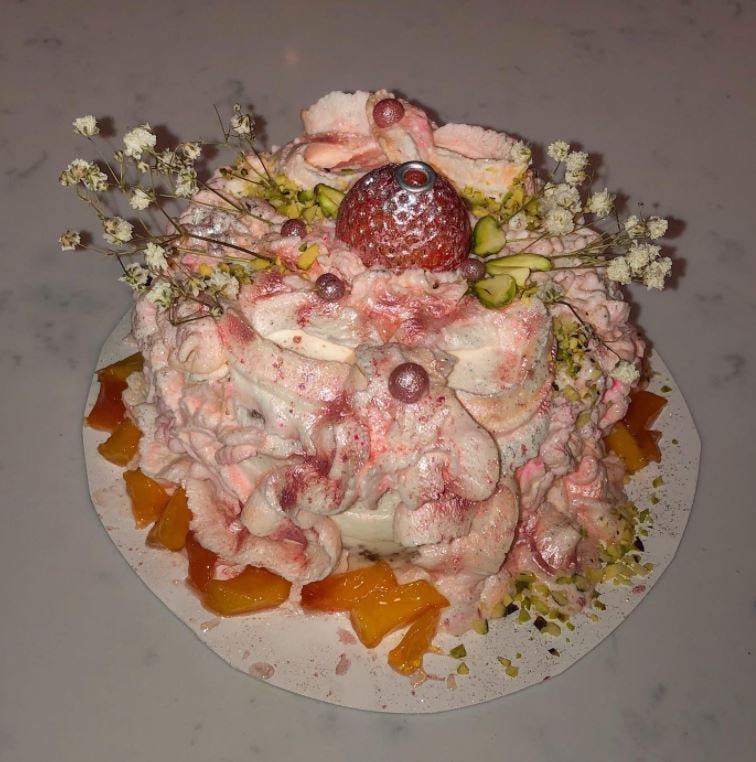
What the hell that message is still perplexes me. I find that the more I look at these cakes the more I wonder. Why is there a single washer on that strawberry? And why do I like it?
These cakes really flirt with the idea of ephemeral art, and I say “flirt” because they’re so cheeky. They have depth, intentionality, and complexity, but they’re also giving rewilded rococo excess. In one eye, you see textured velvet, and in the other, you see mess. The blurred lines allow you to enjoy both ideas and EAT THEM TOO! I wish I was eating one of these between BLM protests and not velveeta, but at least I wasn’t pepper sprayed.
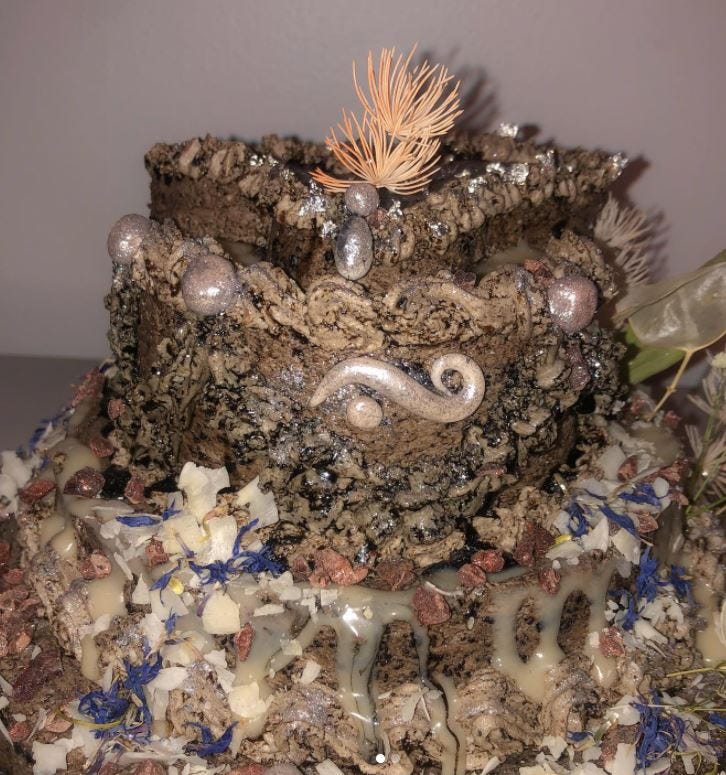
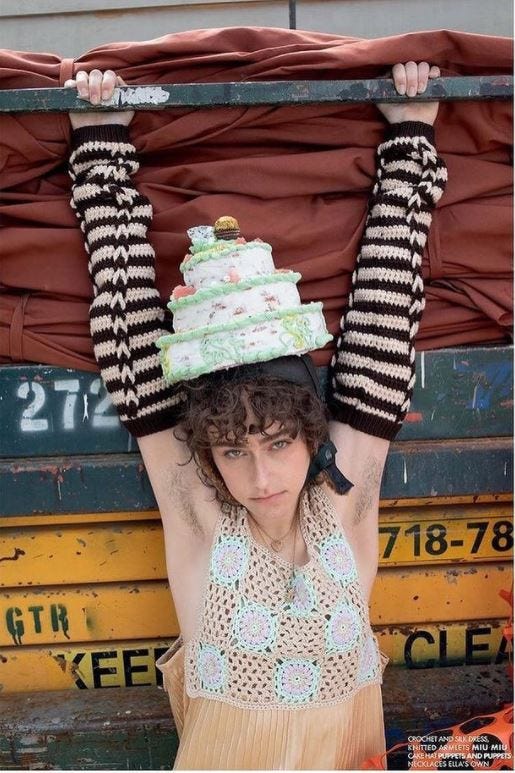
Alli has been doing really well these days- fashion collabs, she has a new gallery show coming out in March, and her cake commission requests have gotten so full, I’m not sure if she’ll ever do them again!
But yes, I did get one.
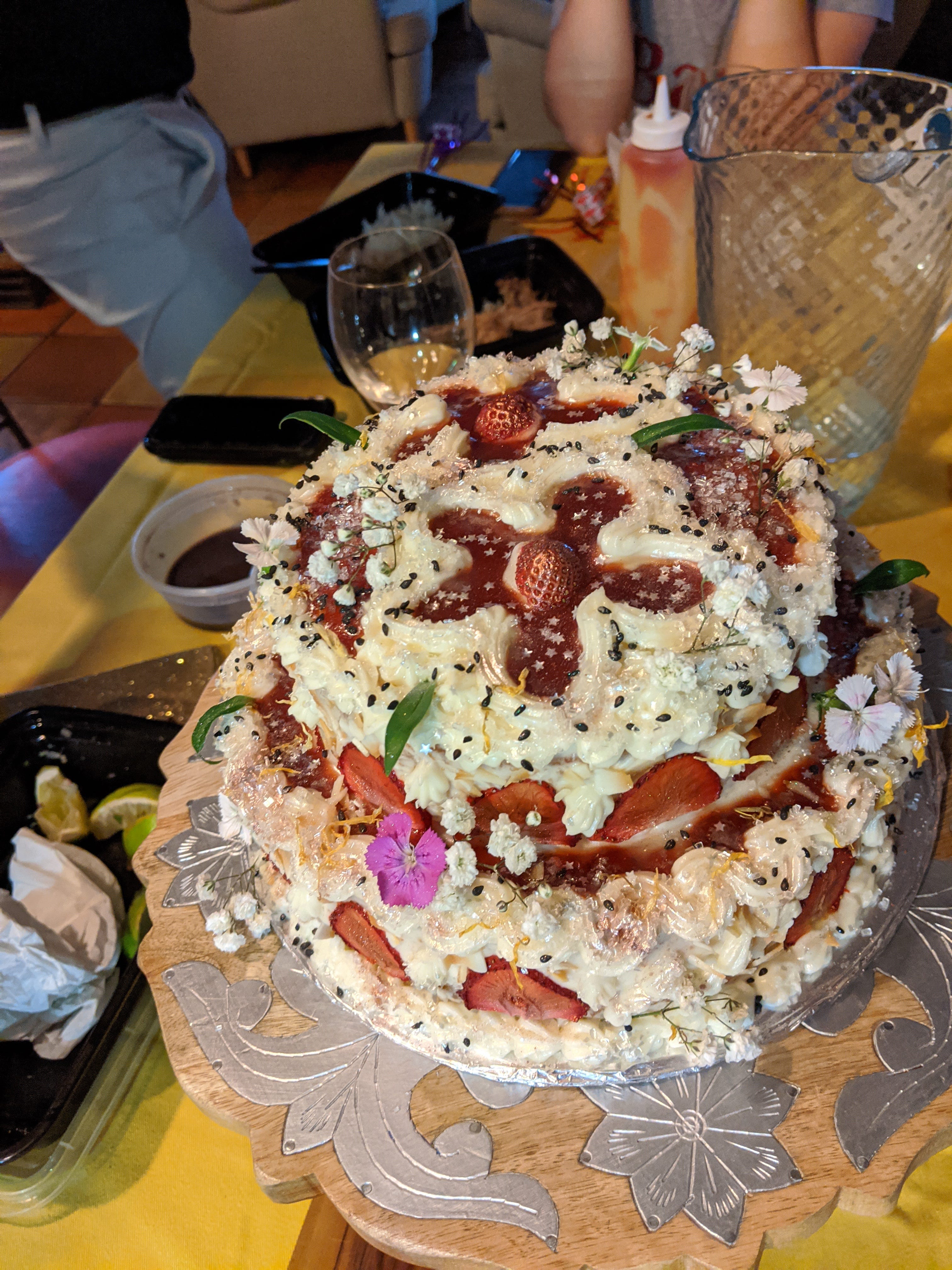
Nic got me my own cakes4sport cake for my 21st birthday in July 2020. I was curious about how it would taste. A thing doesn’t usually have to be delicious to be a beautiful and valid artwork. And yet, it was both.
Normally, an art piece that’s so visually developed doesn’t need to connect to the other 4 senses in a substantial way. For me, the only other artwork that comes close to including taste as an essential aspect of the piece is Untitled (Portrait of Ross in L.A.) by Félix González-Torres. However, the mere existence of the taste element is enough to create Untitled’s point, in conjunction with the gorgeous visual and interactive element of picking up a piece of candy. A simple familiar sweetness, the idea of taste, is all the engagement with that sense the audience needs. The fact that you’ve tasted something at all is groundbreaking enough. But cakes4sport cakes and pieces like them can contain flavors that contrast and complement each other, and can surprise and engage the audience as standalone elements.
On Passover, we have a tradition where we dip bitter herbs into saltwater and eat them at the table. The bitterness of the herb is supposed to represent the bitterness of slavery, and the saltwater is supposed to represent the saltiness of the tears from bondage. Eating it is a visceral memory of something that happened generations ago, right there in your mouth. Much like the colors of a painting, taste can be a truly complex and evocative way of engaging with artistic themes and emotion.
Ok, I’m waxing poetic. Food art is already a thing, just ask the reviewer that went to this wacko Italian Michelin Star restaurant and got served an awful art installation for dinner. But before I knew of the cakes, I always thought that food art was abrasive and uncomfortable or merely decorative and gimmicky, and taste would always either come in as a domineering priority or a crappy afterthought in an edible piece.
Anyway, @cakesforsport was only the beginning. I started finding and following a lot more internet cake people after this, and I got to try a few more. Turns out there is a really amazing online community of baker/artists who make cake commissions and sometimes cake art exhibits from their homes!
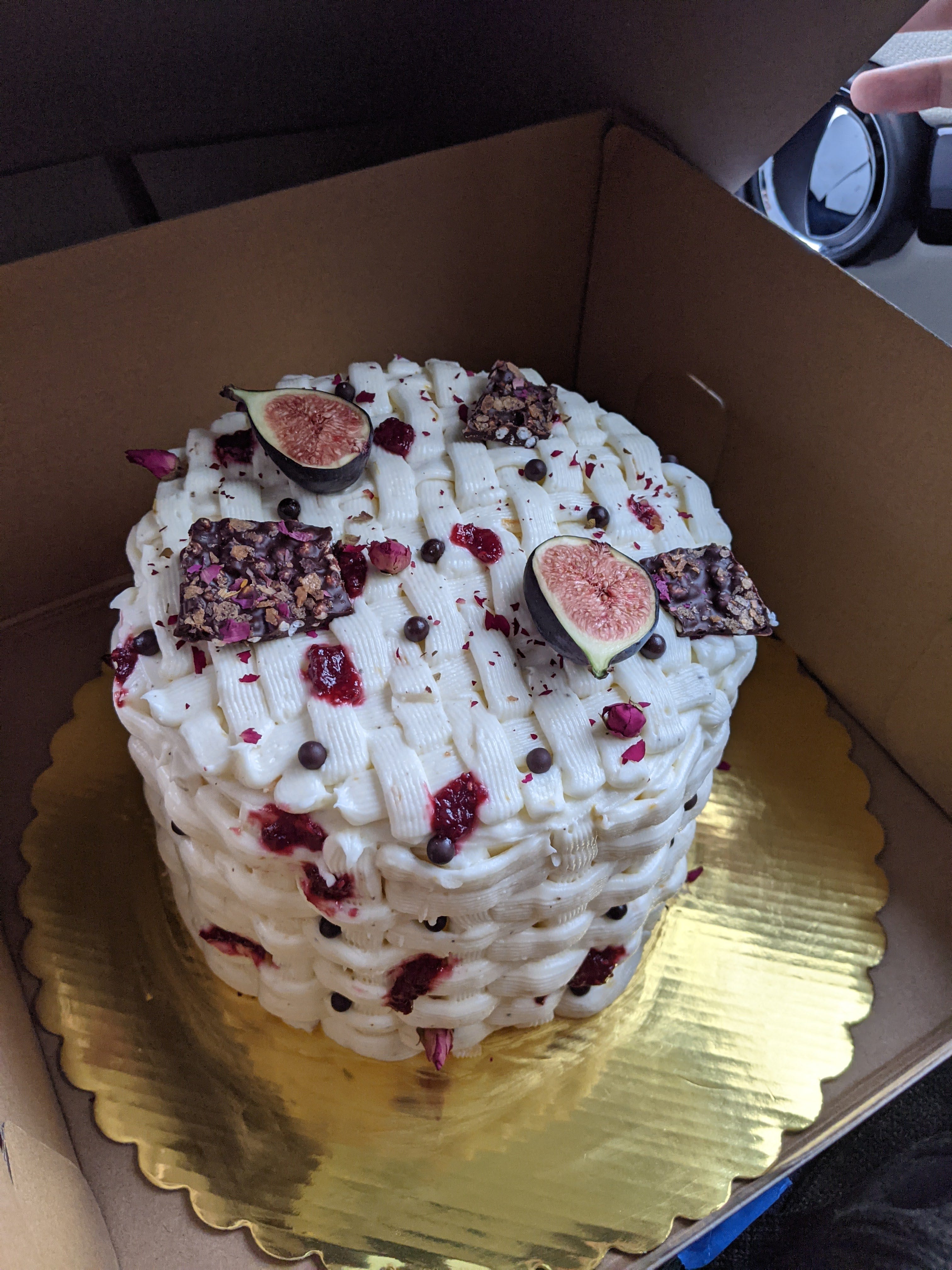
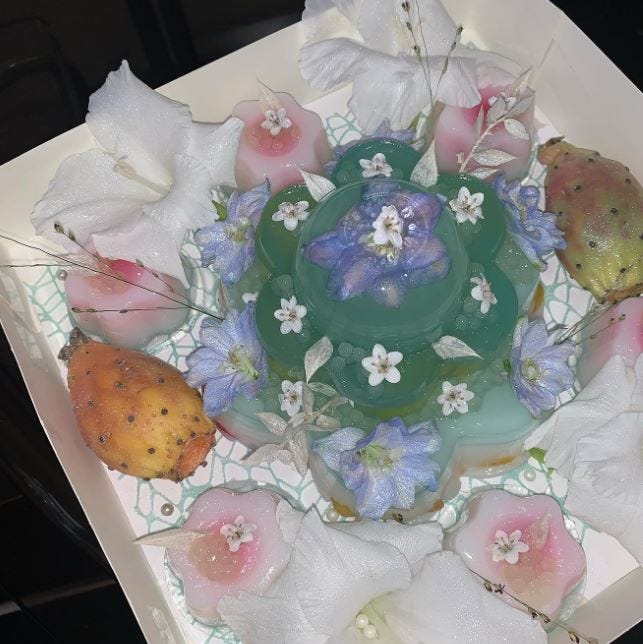
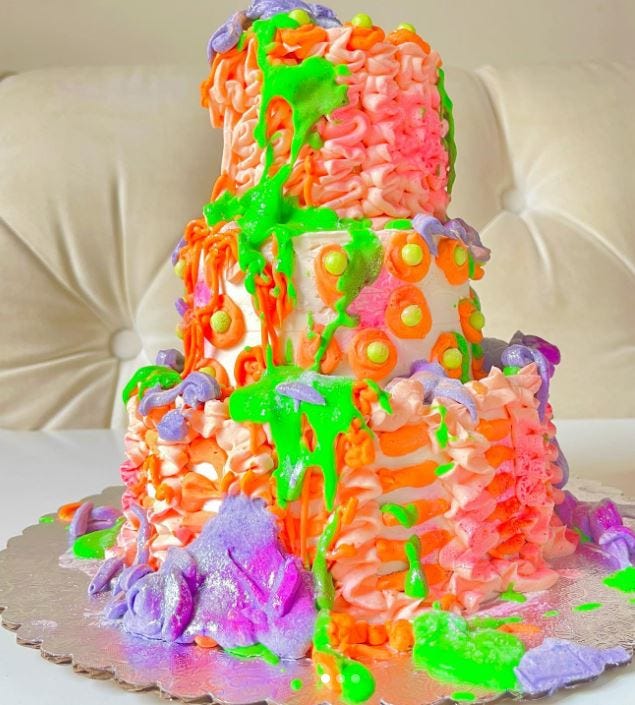
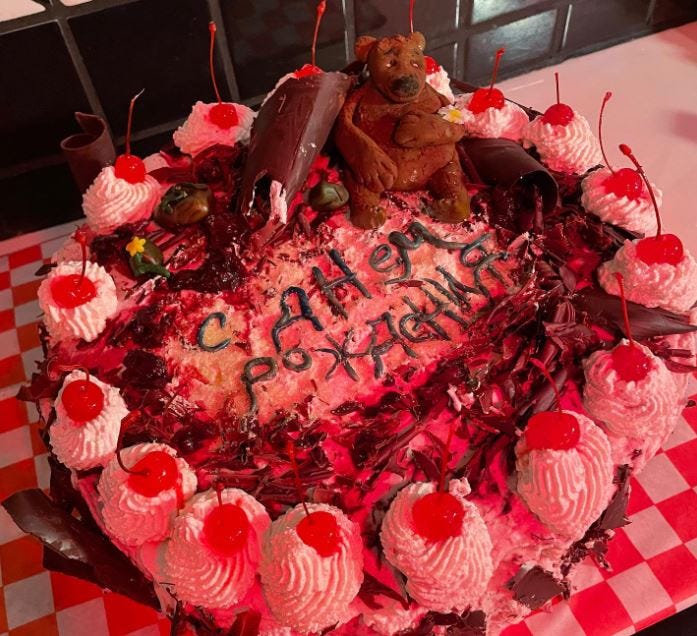
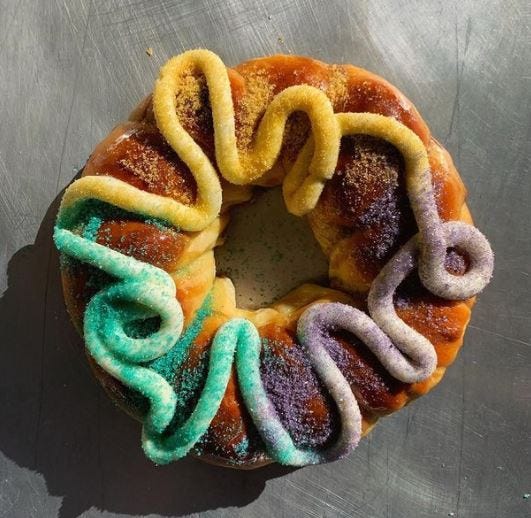
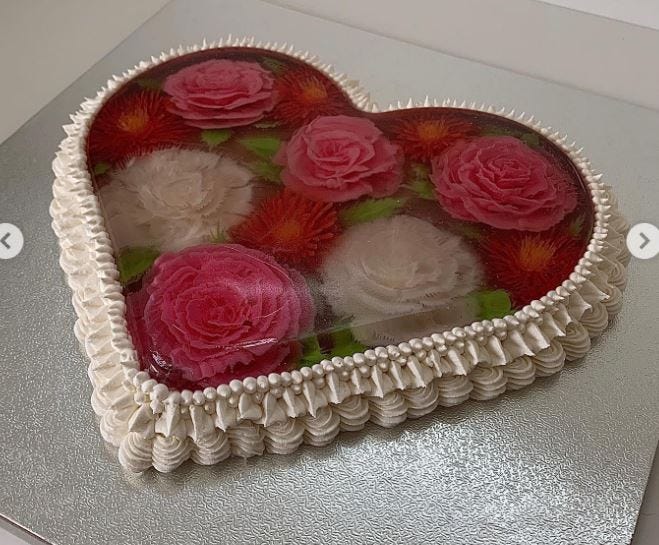
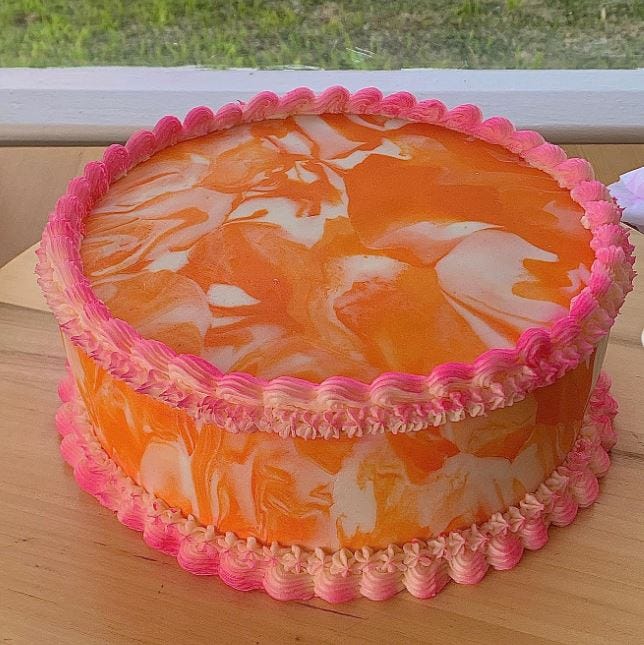
The @forsythia_forsythia cake was also very very tasty, a unique graham cracker flavored cake with dark chocolate fig puree and buttercream frosting. All of the cakes, even @cakes_for_no_occasion, we had to freeze and eat slowly over several days. Each slice was kind of an intellectual commitment as much as it was a delicious one.
I don’t think it’s a coincidence that I got really into all this during lockdown. It was really nice to see a thriving and functional community developing organically on the internet, rather than haphazardly transitioning to a dysfunctional and awkward online presence like many other arts communities were.
These cake pieces worked flawlessly online, but something special about them was they simultaneously brought people back into the real world. Unlike many infographics and email newsletters (ew) being developed at the time, these images weren’t purely digital. The cakes existed— and online audiences were buying them, winning them in raffles, and making them at home. To pick up my cakes, I had to visit a few places I had never been to before, and meet a new person who would hand me their cake themselves.
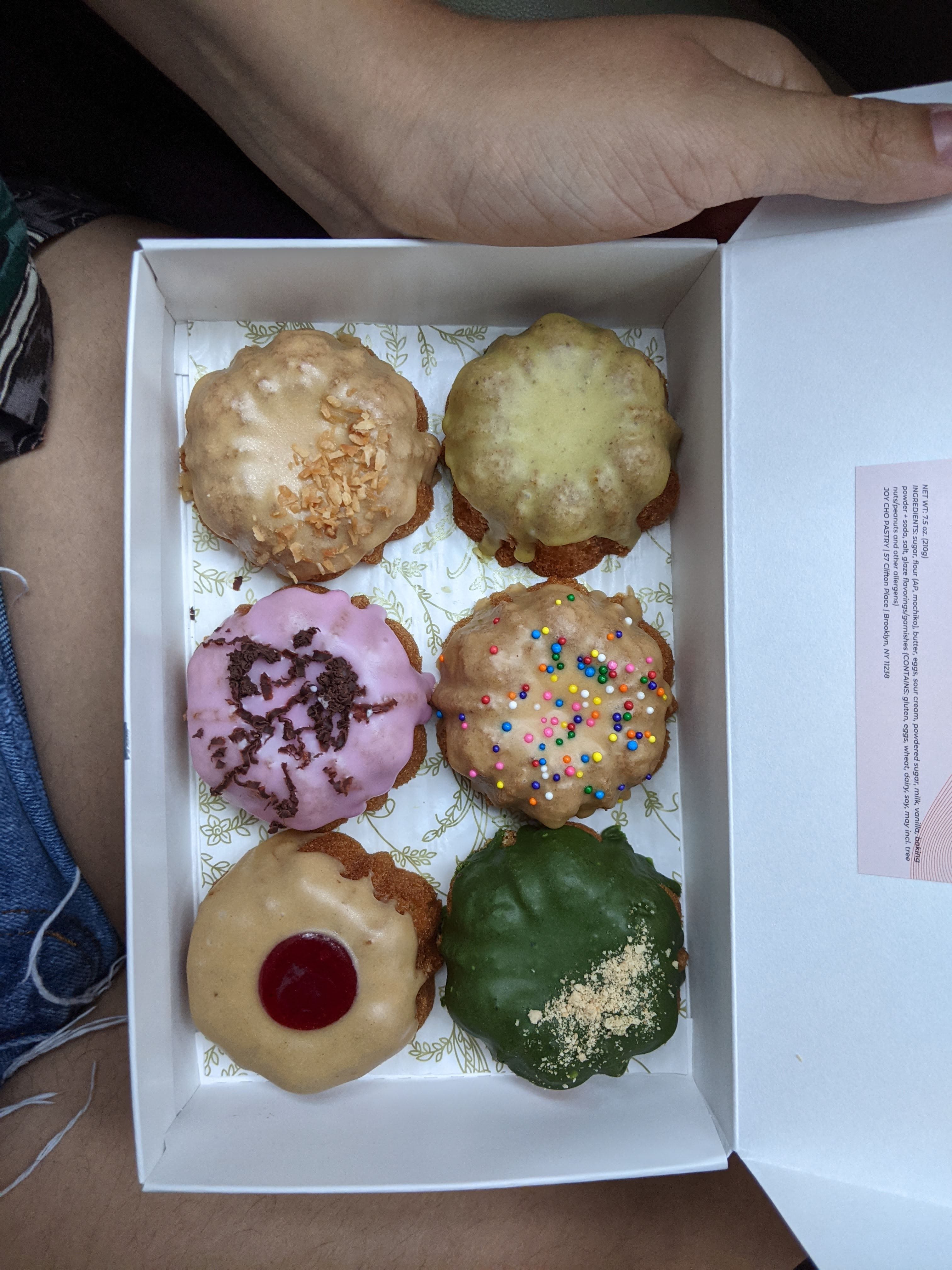
One of the most delightful experiences I had doing this was picking up Joy Cho’s Gem Cakes outside her Brooklyn apartment. My friends and I tasted the tiny cakes (about the size of a halved tangerine) in my family’s mini cooper and compared them together. We watched as a bunch of smiling 20 somethings would walk by Joy’s apartment, she would hand them a treat box with their name on it, and they would do the same as us. And the cakes? So moist. So individually distinct. Buttery.
I think the idea behind a large number of internet communities is that they could inspire action, relationship building, and reflection. Not all of the internet movements have done that, but the cakes movement may have gotten close. As some audience members try to actualize our cravings for online edible art, we can end up engaging with artists, our senses, and each other. Cakes are meant to be shared.
But let’s do a tiny reality check. Even though taste is a gorgeous and important element of these pieces, the primary means of experiencing them is through just looking at them on the internet. These cakes allow one to imagine what it would be like to have not only a treat, but a piece of complex, caloric art that many can see but very few can eat. It’s fascinating that if you’re lucky enough to taste an internet cake, the experience is predicated on the fact that thousands have looked at it and wondered what it would be like to do what you are about to. And that feels like a comment on the nature of the internet itself. The internet allows for a sugar-free version of a certain decadence that we could never accomplish in real life. Online, we’re surrounded by beautiful images, gorgeous bodies, delicious meals, and satisfying videos. Experiencing the full weight all of these things IRL every day would be impossible. Yet, we try our best to imagine if we could all the time.